Section 01Day One Checklist
Section 02Feeding Schedule
Section 03Crate Training
Section 04Joint Health
Section 05First Week
Before They Come Home

The Day One Checklist

English Labs grow fast. Having the right gear ready before your puppy arrives makes the first day far less stressful for both of you.

0 of 10 complete

Physical Gear

Large Crate with DividerEssential for English Labs as they grow quickly. The divider keeps the space cozy to support potty training.
Stainless Steel Slow-Feeder BowlPrevents gulping common in Labs, reducing the risk of bloat.
Adjustable Flat Collar & 6-ft LeashChoose 1-inch width, their necks grow faster than you'd expect.
Heavy-Duty Rubber ChewsKONG Classics are ideal. Labs have a strong urge to mouth things, redirect it early.
Large Breed Puppy FoodSpecifically formulated for joint health in large breeds. We send you home with Purina Pro Plan Puppy to get started.

The Coming Home Routine

First Stop: The Potty SpotTake the puppy directly from the car to their designated outdoor spot before entering the house.
Limit Access EarlyUse baby gates to keep them in one or two rooms. New environments are overwhelming, small is better at first.
Stick to Scheduled MealsEstablish a 2-times-a-day feeding routine immediately. Consistency reduces anxiety.
Keep Day One CalmLimit visitors on the first day. Overstimulation is the most common first-day mistake.
Crate Near Your BedThe first night is easier for both of you if they can hear you breathing. Seriously.
You're all set, enjoy your first day together.
Nutrition

Feeding Schedule

Consistency is everything with Labs. A predictable feeding routine reduces anxiety, supports potty training, and keeps their digestion stable during the transition.

Currently Feeding
Purina Pro Plan Puppy
Large Breed formula, sent home with your puppy
Amount
1 Cup
Per feeding · 2 times per day
Morning Feeding
6:00 AM
Followed immediately by a potty break
Evening Feeding
5:00 PM
Remove water 1–2 hours before bedtime

Use the included 1-cup stainless steel scoop for consistent portions, eyeballing leads to overfeeding.

Remove food after 15–20 minutes if uneaten. Free feeding is not recommended for Labs.

Fresh water should be available throughout the day, removed 1–2 hours before bedtime to support overnight success.

If you choose to switch foods, transition gradually over 7–10 days by mixing the new food in increasing proportions.

Structure & Confidence

Crate Training Guide

Your puppy has already been introduced to crate time at our home. The crate is not a punishment, it is a safe space. Consistency now builds confidence that lasts.
Days 1–2First Nights
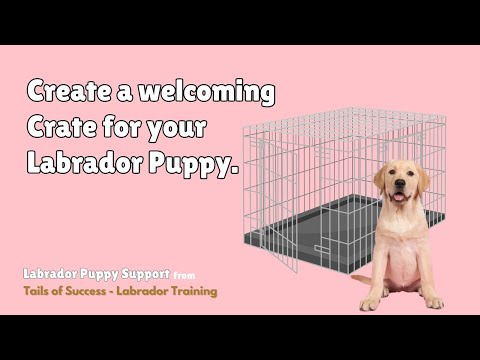
Getting Comfortable1–2 hour intervals for naps. Use after active play when they're naturally winding down. Always potty before going in and immediately after coming out. Create a Welcoming Crate for your Labrador Puppy
Create a Welcoming Crate for your Labrador Puppy
Reward calm, quiet entry. Don't reward whining to come out, wait for a pause, then release.
NightsWeeks 1–2
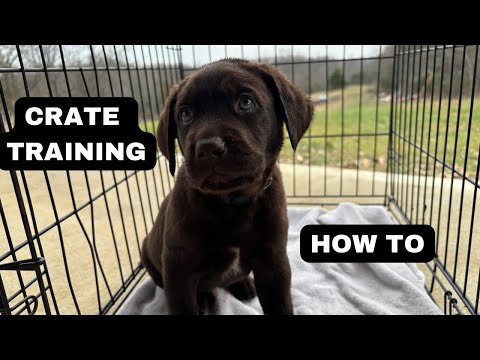
Handling the WhiningKeep the crate near your bed, hearing you breathe genuinely helps. Expect 1–2 potty breaks the first few nights. 6 Week Old Puppies Learn Crate Training at Night, Labrador Retrievers
6 Week Old Lab Puppies, Crate Training at Night
Take them out for a boring, low-light, no-play potty break, then straight back in. Keep it businesslike.
Week 2+Building Routine
Making It Their Favorite SpotMost pups can hold it 3–4 hours overnight by week two. Place the scent blanket we sent home inside, it carries familiar comfort. The ULTIMATE Crate Training Guide For Your New Dog
The ULTIMATE Crate Training Guide
Never use the crate as punishment. The first 3 nights are the hardest, it gets easier fast.
Protecting Your Investment

Joint Health & Exercise

Joint health is the #1 physical concern for English Labradors during their first 6 months. Growth plates remain soft and vulnerable until 12–18 months, over-exertion during this window can cause permanent damage leading to early-onset hip and elbow dysplasia.

5

minutes of structured exercise per month of age, twice daily

The 5-Minute Rule

"Structured exercise" means continuous on-leash walking or repetitive training. It does not count free play in the yard where the puppy chooses their own intensity and rest.

2 Months
10 min · twice daily
4 Months
20 min · twice daily
6 Months
30 min · twice daily
18 Months
Full exercise OK

Safe Activities

  • Short leash walks on soft grass or dirt paths
  • Swimming, zero impact while building muscle
  • Sniffing and scent games, mentally tiring without physical strain
  • Gentle play with calm, well-matched adult dogs

High-Risk, Avoid

  • Repetitive fetch, hard sprints and sudden braking damage elbows
  • Running or jogging until 18 months
  • Repetitive stair use before 3 months
  • Play on tile or concrete, slipping causes joint torque
  • Jumping in/out of vehicles, always use a ramp or lift them

Signs of Over-Exertion

  • Stiffness after napping or difficulty rising
  • Limping or "bunny hopping" with the back legs
  • Lying down during a walk and refusing to move ("the splatted pancake")
  • Unusual hyperactivity or excessive nipping, fatigue in Labs often looks like irritability
What to Expect

Your First Week at Home

The first few days are about adjustment and reassurance, for your puppy and for you. Mild whining at night, extra sleep, and some hesitation are all completely normal.

Your puppy's daily flow

Wake Up Potty Eat Play Nap Repeat

What to Expect

  • Mild whining at night, normal for the first several nights
  • More sleep than you expect, puppies sleep up to 18 hours a day
  • Hesitation exploring new spaces
  • Some digestive upset during the food transition

What Helps Most

  • Stick to the feeding and sleep schedule, even on weekends
  • Keep introductions calm and intentional
  • Use the scent blanket we sent home
  • Introduce new spaces and people gradually over days, not hours

Potty Training Foundation

  • Potty break immediately after waking, after eating, after playing, after napping
  • Every 2–3 hours during the day while they are young
  • Praise immediately, within 2 seconds of success
  • Your puppy has already been introduced to a designated potty routine. Keep it going.

Transitioning Smoothly

  • Keep feeding times consistent from day one
  • Maintain structure, routine is confidence for a puppy
  • Avoid overwhelming environments in the first week
  • We are a call or text away, reach out anytime
We're Here

Questions After Go-Home Day?

Our relationship doesn't end when your puppy comes home. Whether it's a question about feeding, behavior, development, or just a photo update, we love hearing from our families.

Get in Touch View FAQs